The little Savoyard chimney sweeps
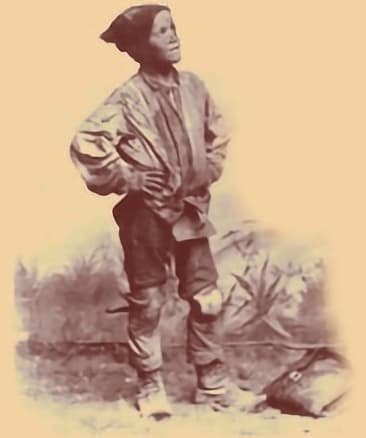
With his red cap, his smiling soot-covered face and his ladder on his back, the little chimney sweep is not a myth but a harsh reality that only ended in 1914.
In the mountains, to survive winter, large families in Savoy practised seasonal emigration from the Middle Ages onwards.
Many inhabitants of the Maurienne, the Aosta Valley and the Tarentaise would travel to cities like Lyon and Paris. There, chimneys were plentiful and children aged six to twelve were employed for chimney sweeping due to their small size. Their work was extremely hard – they had to climb inside chimneys using their elbows and knees to scrape soot from the flues.
Unfortunately, they were exploited by recruiters who enriched themselves at their expense and did not respect the terms of their employment contracts – no school, no catechism, no wages and no food. The children were forced to beg for food. Many of them suffered from lung diseases.
In the 17th century, religious figures became alarmed by this situation and came to their aid. Then in 1735, the Abbé du Breuil de Pontbriand created the Oeuvre des Petits Savoyards. Finally, in 1863, the Prefect of Savoy regulated the profession by banning it for children under twelve. It was not until 1914 that this child exploitation came to an end.
It is the cheerful and resourceful character of the little chimney sweeps singing on the rooftops that made them so popular and elevated them to the status of good luck charms…